

Birthright Citizenship Is the Wrong Question
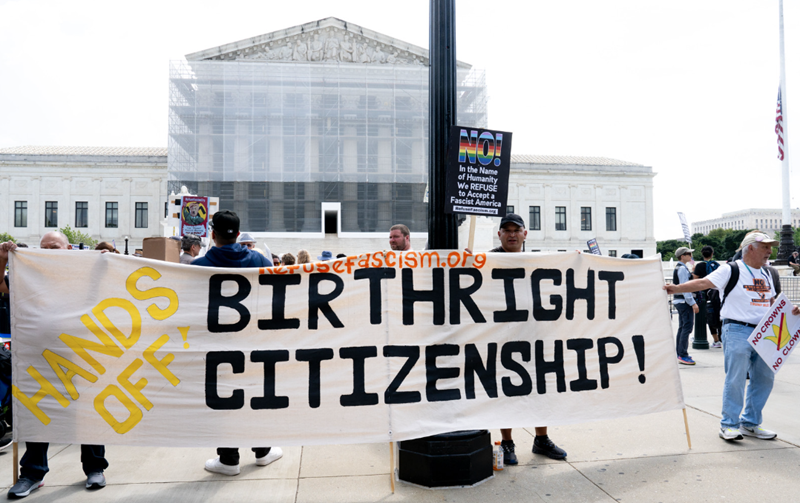
On June 30, 2026, the U.S. Supreme Court struck down President Donald Trump’s executive order that sought to end birthright citizenship for children born in the United States to parents who are in the country illegally or only temporarily. In a majority opinion written by Chief Justice John Roberts in the case Trump v. Barbara, the Court held that the executive order could not be reconciled with the 14th Amendment’s Citizenship Clause, which grants citizenship to those “born… in the United States, and subject to the jurisdiction thereof.” The Court reaffirmed its 1898 decision in United States v. Wong Kim Ark, concluding that children born on American soil to parents unlawfully or temporarily present are citizens at birth.
Justice Samuel Alito dissented, arguing that the 14th Amendment was never intended to confer citizenship on children whose parents owed no permanent allegiance to the United States. Justice Clarence Thomas also dissented, criticizing what he described as the repurposing of the 14th Amendment for modern political projects. Despite these dissents, the Court upheld the longstanding interpretation of birthright citizenship.
While the legal and constitutional questions surrounding this ruling are significant, the intense national focus on birthright citizenship reveals a deeper problem. The debate over who should receive citizenship only exists in its current form because of two man-made systems that Scripture does not authorize: the modern welfare state and the legislative-democratic system.
The Welfare State Creates Artificial Incentives
When a nation establishes extensive taxpayer-funded programs — including healthcare, education, housing assistance, and direct financial support — “citizenship” takes on a different character. People are drawn not only by opportunity and freedom, but by access to resources taken from others through the force of taxation.
Under biblical law, no such system exists. God’s Law does not grant the civil magistrate the authority to seize wealth from some citizens in order to redistribute it to others. Charity and mercy are the responsibility of individuals, families, churches, and voluntary associations. When the state assumes this role through compulsory taxation and bureaucracy, it creates powerful incentives for people to enter and remain in the country — incentives that would largely disappear under God’s Law.
Birthright citizenship becomes a major political issue precisely because the welfare state makes citizenship economically valuable in ways God never intended. Remove the welfare state, and the stakes of automatic citizenship drop significantly.
The Legislative System Turns Citizenship into a Weapon
Even more problematic is the modern legislative system itself. Because legislative bodies have been granted the authority to continually create new laws, expand government power, and redistribute resources, gaining the right to vote becomes extremely important. Citizenship is no longer primarily about belonging to a people under a fixed standard of justice. It becomes a means of capturing political power in order to reshape the law in one’s favor.
This stands in direct contrast to the biblical model of civil government. Scripture presents the magistrate’s role as judicial, not legislative. The civil authority is to apply God’s already-revealed Law to specific cases brought before him. He does not possess the authority to invent new crimes, new regulations, or new entitlements through democratic processes.
When law-making becomes the central function of government, every group — whether native-born or immigrant — has a strong incentive to gain political control. This turns immigration and citizenship into high-stakes political battles.
Asking the Wrong Question
When the conversation focuses primarily on ending birthright citizenship while leaving the welfare state and the legislative system untouched, we are treating a symptom rather than the disease. Even if birthright citizenship were abolished tomorrow, the underlying structures would remain. The welfare state would continue to draw people in through promises of benefits, and the legislative system would continue to make political power the prize worth fighting for.
A Lancastrian theonomic approach asks more fundamental questions:
- By what authority does the civil magistrate create and fund extensive welfare programs through forced taxation?
- Why does the civil government possess the power to continually make new law rather than simply applying God’s Law?
- What would immigration and national identity look like in a society where the magistrate was limited to his proper judicial role?
These are the questions Scripture actually addresses. Until they are confronted, debates over birthright citizenship will remain surface-level disputes within a system that is structurally misaligned with biblical justice.
The Real Issue
The problem is not primarily who receives citizenship at birth. The problem is that we have constructed a civil government that Scripture never authorized — one in which citizenship grants access to a vast system of benefits and the power to continually reshape the law through legislation. This arrangement makes immigration and citizenship far more contentious than they would be under God’s Law. Under biblical justice, the magistrate’s role is narrow: to punish actual evil as God defines it and to protect the righteous. There is no standing bureaucracy empowered to regulate every area of life, nor is there a legislative body authorized to create new law. Justice is accusatorial and case-specific, not regulatory and preemptive.
When a nation returns to this biblical structure, many of the problems we currently fight over lose much of their power. People will still move between nations, just as they are now. Biblical law provides clear standards for addressing actual crimes. But it does not create the artificial incentives and political weapons that make modern immigration debates so bitter and intractable.
Birthright citizenship is not the root issue. The root issue is that we have built a system of civil government that turns citizenship into both an economic benefit and a political weapon. Until that system is challenged at the structural level, arguments over who receives citizenship will continue to miss the deeper problem.