

Serving as a Theonomic Magistrate in a Statist System
The magistrate is to judge disputes by the standard of Scripture, teaching its God’s statutes and bearing no shield of immunity (Deuteronomy 1:17). Such a man fears God, hates covetousness, and lives among his people, accountable to the same Law (Exodus 18:21). Consider Job. In Job 29, he recounts how he “put on righteousness” and “broke the fangs of the unrighteous,” delivering the poor, the fatherless, and the widow with compassion (Job 29:14, 17). The young honored him, the aged stood in respect, and the needy blessed his name, for he was “eyes to the blind” and “feet to the lame” (Job 29:15). Job taught God’s ways, searched out the cause of the stranger, and bore the burden of his judgments, living among his people as a beacon of justice. What modern politician can claim such a legacy? Today’s leaders, like the Pharisees, multiply laws to justify their power, crafting tax codes and subsidies that oppress the righteous while shielding the wicked (Matthew 23:13). Job, by contrast, served God’s Law alone, a standard no legislator can rival, showing that true magistracy exalts God’s justice above man’s folly. Yet, today’s civil rulers—senators, governors, presidents—are steeped in the iniquity of human legislation, enacting statutes that defy God’s perfect Law (Psalm 19:7). Political parties, whether openly hostile or cloaked in secular compromise, serve this statist regime, peddling laws that scorn God’s ways. Can a Christian, steadfast in Lancastrian theonomy, serve as a magistrate in a system opposed to Christ? I believe he can, if he will follow justice and only justice.
A theonomic magistrate must remain unswayed by corrupt parties, standing apart from systems that exalt man’s word above God’s. At Future of Christendom, we reject playing political games with groups like the Republican Party leadership, currying favor or softening our message to win influence. We are not opposed to a pragmatism submitted to Christ’s lordship, but we hold that the most pragmatic course is to stand firm on God’s Law, shifting the Overton window to make biblical justice the measure of governance. A theonomist’s campaign should embody this stand, teaching the people to judge by God’s Word.
Picture a candidate who magnifies God’s Law in every word of his campaign, judging every issue—taxation, property, crime—by Scripture, proclaiming that human laws are but “commandments of men” (Matthew 23:13). His campaign, win or lose, introduces voters to the truth that God’s Law alone unites justice and mercy (Micah 6:8), challenging them to question why their governance departs from God’s eternal standard. If elected, he refuses to enable tyranny, voting against man-made measures to uphold God’s Law as a godly cog in a statist system. While one man might not make a noticeable difference in policy during his lifetime, the greater fruit lies in shifting the Overton window, inspiring future campaigns. This long-term, strategic vision aligns with the postmillennial hope: a world where generations embrace God’s Law as the foundation of justice.
It is important here to realize that the potential magistrate, by maintaining what might look like a pointless, campaign-ending loyalty to God’s law, has already begun to fulfill his role as a biblical civil officer by teaching the people God’s law (Deuteronomy 17:10-11; Ezra 7:25; 2 Chronicles 17:7-9). Thus, his integrity is already evident as being faithful to his duty and displaying a non-compromising stance, elected or not.
This witness shapes our children, the future of Christendom. We are to teach our children to judge the world by God’s Word, speaking of His statutes in our homes and ways (Deuteronomy 6:7-9). The theonomist’s campaign models this calling. It shows the watching world that God, and only God, is the authority on justice. The next generation must be equipped to establish a theocracy when current systems fall, ready to bear the burden of righteous governance. A godly campaign, even in defeat, inspires them to stand fast in the liberty of Christ, unentangled by the yoke of human tyranny, preparing them to let “justice run down like water” (Amos 5:24).
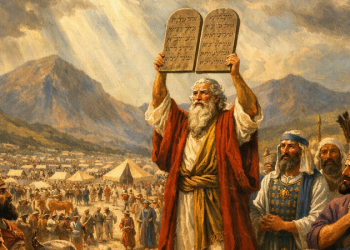
Trials will come—slander, cancellation, attacks on family—for the world despises those who proclaim Christ’s rule. Yet, these are opportunities to glorify God, as Paul rejoiced in suffering for the gospel (Philippians 1:29). Whether the campaign ends in office or defeat, its true harvest is the spread of God’s Law, stirring souls to seek His righteousness and equipping our children to build a nation governed by His Word. To run is to teach, as Moses and Job did, the way men must walk. Let those who run do so with boldness, that our children may reap a society ruled by His statutes.
In conclusion, I offer a brief word regarding the oath of office. To swear to uphold and defend the Constitution, be it state or federal, is, in some cases, an oath to commit injustice. The requirements and standards between the Bible and our constitutions are often at odds with each other. There, of course, should never be such a conflict of interest involving God’s law and man’s law, yet here we are. The civil magistrate, though he swears an oath of loyalty to man’s laws, must remember that a higher law, a perfect law, sits in judgment of his decisions. God’s law facilitates true religion that is in a perpetual state of protecting widows and orphans, to say nothing of punishing evildoers. If a magistrate finds himself about to commit injustice according to God’s law but “justice” according to the doctrines of men, he must always follow the former.
[See Future of Christendom’s Statement on Biblical Governance.]