

The Blessing of an Open Bible
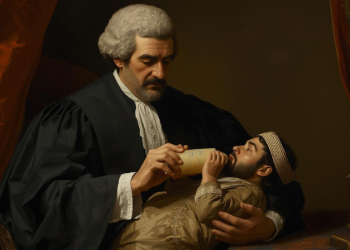
In a recent conversation, a Christian brother floated the idea that the church might be better off if the Bible were not accessible to everyone, hinting that ecclesiastical control could prevent division and maintain unity. I am not sure how serious he was, but the idea, reminiscent of pre-Reformation restrictions, echoes objections to the Protestant Reformation’s push to place Scripture in the hands of all, a cause championed by William Tyndale, who defied the Pope’s man-made laws and vowed to make the Scripture accessible to the “plowboy.” While I share a concern for the church’s unity, restricting Bible access misunderstands the purpose of God’s Word and the church’s trajectory. Universal access is a tremendous blessing, fostering growth, maturity, and eventual unity as the Spirit works through the church over time. Like a toddler learning to walk, the church may stumble, but these steps are vital for its long-term flourishing under God’s Law.
The Reformation’s Triumph: Scripture for All
The Reformers fought to liberate the Bible from the clutches of a clerical elite, recognizing that God’s Word belongs to all His people. Tyndale’s vision was grounded in the biblical principle that Scripture equips every believer for righteousness (2 Timothy 3:16–17). By translating the Bible into the vernacular and making it accessible, Reformers like Tyndale and Luther empowered individuals to know God’s truth directly, bypassing intermediaries who often distorted it. This was not a call for individualism but a restoration of the priesthood of all believers (1 Peter 2:9), enabling each Christian to engage with God’s Law and gospel personally.
The objection that universal access breeds division assumes that schisms are a net negative, ignoring the blessings that flow from an open Bible. The Reformation exposed false teachings entrenched by Rome, such as indulgences and papal supremacy, precisely because laypeople could read Scripture for themselves. Psalm 119:105 declares, “Your word is a lamp to my feet and a light to my path.” By placing this lamp in every hand, the Reformers unleashed a wave of theological renewal, moral reform, and societal transformation, from literacy to governance, that continues to shape the modern world.
The Toddler Church: Growth Through Stumbles
Critics point to the church’s divisions—denominational splits, theological disputes, and conflicting interpretations—as evidence that universal access has failed. Yet, this perspective is shortsighted, especially from a postmillennial vantage point. The New Testament church, though 2,000 years old, is still in its infancy in the grand sweep of God’s redemptive plan. Like a toddler learning to walk, the church may stumble, cause messes, or even break things, but these are signs of growth, not failure. A child’s falls are not a reason to keep them crawling; they are necessary for maturity.
The schisms lamented by critics are often the painful but necessary process of refining doctrine. The proliferation of denominations, while messy, reflects believers wrestling with Scripture to discern truth, a process that strengthens the church over time. For example, the Reformation’s debates clarified core doctrines like justification by faith, which might have remained obscured under a monolithic, top-down system. The church’s divisions, when rooted in sincere engagement with Scripture, serve as iron sharpening iron, honing its understanding of God’s truth.
The Spirit’s Work: Unity Through Maturity
Opponents of universal access often advocate a return to centralized control, such as a papal or clerical authority, to enforce unity. This approach, however, substitutes human coercion for the Spirit’s transformative work. The Bible teaches that true unity arises not from suppressing access to truth but from the Spirit guiding believers into all truth (John 16:13). As a postmillennialist, I believe the church has a long future ahead, with centuries or millennia to mature under the Spirit’s guidance. False teachings, like dispensationalism, may persist for a time, but as the church grows, the Spirit will cleanse it of error, fostering unity grounded in God’s Word, not imposed by human authority. I will not live to see it all accomplished, but I have little doubt that Christ will continue to beautify his church in history, progressively freeing her from false teachings.
Ephesians 4:11–14 envisions this process: Christ gave teachers to equip the saints until “we all attain to the unity of the faith and of the knowledge of the Son of God, to mature manhood.” Universal access to the Bible equips every believer to participate in this maturation, testing teachings against Scripture (Acts 17:11). Over time, as the church deepens its understanding of God’s Law and gospel, divisions will diminish, not through top-down control but through the organic growth of a Spirit-led body.
The Dangers of Restricting Access
While pastors play an important role in leading God’s people, restricting Bible access to an elite class risks repeating the errors of the pre-Reformation era, where clerical gatekeepers wielded Scripture to consolidate power rather than edify the church. Jesus warned against such gatekeeping, declaring that the kingdom’s secrets are revealed to “babes” but hidden from the self-appointed wise (Matthew 11:25). Denying the plowboy his Bible not only stifles personal faith but also hinders the church’s ability to hold leaders accountable. Without universal access, false teachings can fester unchallenged.
Moreover, restricting access undermines the theonomic principle that God’s Law governs all of life. Deuteronomy 6:6–9 commands that God’s words be taught diligently to children and kept in daily life, implying broad dissemination, not elite control. An open Bible empowers believers to apply God’s Law to every sphere—family, economics, justice—fulfilling their duty to take dominion (Genesis 1:28). Limiting access would choke this mission, leaving the church dependent on fallible human authorities rather than God’s infallible Word.

The Civil Consequences of a Closed Bible
When the Bible is withheld from the people, man-made traditions flourish, paving the way for injustice and the oppression of the righteous. In Jesus’ day, the Pharisees acted as self-appointed guardians of God’s Word, dictating what God demanded while elevating their traditions to the level of divine law. Commenting on Mark 7:1–8, R.C. Sproul described this as “regulation madness,” where the Pharisees’ policies became conscience-binding regulations, stripping freedoms and consolidating power. “This is what happens when people who have a disposition to control others’ lives begin to chip away at their freedoms and accumulate power for themselves,” Sproul wrote. Jesus challenged this by appealing directly to Scripture, expecting even the common people to know it, and dismissing human conventions (Mark 7:8). From a theonomic perspective, this illustrates the peril of restricting Bible access: without God’s Word, a modern class of Pharisees—whether in the church or civil realm—can impose unbiblical traditions, leading to regulatory oppression.
As theonomists, we insist that God’s Law, accessible to all, is the only standard for justice, preventing the rise of elitist gatekeepers who distort truth for power. When the people lack the Bible, civil magistrates and ecclesiastical leaders can mimic the Pharisees, crafting man-made laws or doctrines that favor the powerful and oppress the righteous, as seen in modern legislative systems enabling corporate dominance. An open Bible equips every believer to hold such authorities accountable, testing their decrees against Scripture (Acts 17:11). Psalm 119:99 declares, “I have more understanding than all my teachers, for your testimonies are my meditation,” showing that even the simple, meditating on God’s Word, can surpass the wisdom of self-appointed elites. Likewise, Proverbs 28:5 states, “Evil men do not understand justice, but those who seek the Lord understand it completely,” affirming that the righteous, with access to Scripture, grasp true justice. By ensuring universal access, the church and society can resist the “regulation madness” Sproul warned of, fostering a culture where God’s Law reigns supreme, and justice flows unhindered by human traditions. As Deuteronomy 6:6–9 commands, God’s Word must saturate daily life, empowering all to live and govern righteously under His authority.
Conclusion
The church’s divisions, though real, are not a reason to regret universal access to the Bible but a call to press deeper into God’s Word. Like a toddler, the church is growing, and its stumbles are part of the journey toward maturity. The Reformers’ legacy—Tyndale’s plowboys reading Scripture—has unleashed blessings that far outweigh the challenges, from theological clarity to cultural renewal. As postmillennialists, we trust that the Spirit will guide the church toward greater unity over time, not through human coercion but through faithful engagement with an open Bible. As Psalm 19:7 proclaims, “The law of the Lord is perfect, reviving the soul; the testimony of the Lord is sure, making wise the simple.” Let us trust in the perfection of God’s Word, confident that its universal reach will lead the church to maturity and glory under Christ’s reign.