

Jeremy Howard’s Chart on Conservatism and the New Christian Right
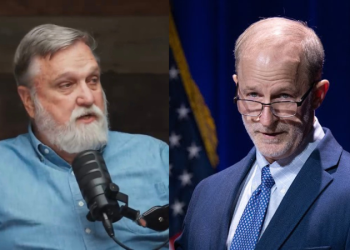
Jeremy Howard’s Do Theology video, 151: Christian Nationalism: Where Are We Now? (part two), presents a chart contrasting “Traditional Protestant Conservatism” (TPC) with the “New Christian Right” (NCR), presenting them as the two paths for Christian engagement with culture. As a theonomist and postmillennialist, I reject this dichotomy. Howard’s chart, pitting TPC’s individualism and church focus against NCR’s tradition and political activism, misrepresents those of us who have long opposed versions of both, appealing instead to God’s law (theonomy). Neither TPC nor NCR, as Howard presents them, submits to Scripture’s standard for civil order and cultural renewal. Theonomy offers the biblical path. In this article, I make a few comments exposing the chart’s flaws and the broader error of sidelining theonomy.
Howard’s chart lists four TPC tenets: (1) valuing individual, contemporary Bible study over historical interpretations, (2) prioritizing church work and evangelism, (3) embracing complementarianism with expansive women’s roles, and (4) viewing Israel as God’s ally. NCR counters with: (1) prioritizing church history for security (being in the right tradition), (2) equal importance of political/occupational work and ecclesiastical tasks, (3) fiercely upholding patriarchy, and (4) doubting Israel’s role. By assuming postmillennialists (often theonomists) who reject the New Christian Right (aka Christian nationalism) align with TPC, Howard inadvertently constructs a strawman, overlooking robust critiques of both camps. (Future of Christendom, for example, offers numerous critiques of both TPC and NCR. We argue that humanistic systems—whether TPC’s pietism or NCR’s nationalism—usurp God’s law, hindering the righteous). Theonomy demands Scripture’s supremacy, rejecting all other views when they contradict it.
Chart Point 1: Bible Study vs. Tradition
Howard’s first contrast—TPC’s individual Bible study versus NCR’s reliance on church history—is a false dilemma. There is a better way. Theonomists honor historical confessions, like the Westminster Confession, but never above Scripture. The Reformers, whom Howard’s NCR venerates, rewrote confessions, building on predecessors while testing all by God’s Word (WCF 1.10). Westminster was not the first confession, nor the last word. Theonomists stand on the shoulders of giants, but those giants taught us to wield Scripture’s sword, not idolize their words. In the end, every people will have to determine which “tradition” most aligns with Scripture, and then be prepared to improve upon said tradition. Howard’s binary pits sola scriptura against tradition, ignoring theonomy’s balance: we cherish history’s wisdom but bow only to God’s law. NCR’s quest for “security” in tradition risks Rome’s error, while TPC’s individualism also misses the mark.

Chart Point 2: Church vs. Political Work
Equally troublesome is Howard’s second contrast: TPC’s church-centric evangelism versus NCR’s equal weighting of political and ecclesiastical work. The sacred-secular divide is anathema to theonomy. God rejects worship tainted by injustice, making civil righteousness at least as weighty as ritual worship (Matthew 23:23; cf. Isaiah 1:12-17). Theonomy obliterates the divide, subjecting all life—church, state, family—to God’s law (Deuteronomy 4:6-8). TPC’s pietism retreats to the sanctuary, ceding culture to humanists, while NCR’s activism often trades biblical law for political expediency. Theonomists, long before NCR’s rise, called for justice in the public square as a godly requirement.
Chart Points 3-4: Patriarchy and Israel
Less central, but telling, are Howard’s contrasts on gender and Israel. TPC’s complementarianism, with “expansive” women’s roles, and NCR’s fierce patriarchy are secondary to theonomy’s core: God’s law governs all. I affirm patriarchy, seeing the created order (Genesis 2:18, 1 Timothy 2:12-13) as biblical, but this debate distracts from the standard—Scripture. Similarly, TPC’s view of Israel as God’s ally is irrelevant to the main point. I agree with NCR’s critique of TPC’s view (as defined by Howard); it is disastrous insofar as it has led America (contrary to biblical law) to prop of Israel. My preterist reading of Romans 11 sees God’s people in Christ (the church), not the modern state of Israel, as central. Theonomy demands God’s law for all nations (Isaiah 42:4), not special pleading for one. Howard’s chart muddies these waters, framing side issues as defining.
The Theonomic Alternative
The chart’s fatal flaw is its omission of theonomy, a position that many, including the men of Future of Christendom, have championed against TPC’s “post-war consensus” long before NCR emerged. We have sought to expose the idolatry of statism, whether TPC’s retreat or NCR’s version of nationalism. Both neglect God’s law as the blueprint for civil laws and societal structure. Theonomy integrates justice and evangelism, transforming nations through the gospel (2 Corinthians 5:17). NCR’s political focus risks pragmatism, while TPC’s piety abandons the public square to the GOP or other soft-bellied lobbyists and legislators. Theonomists reject both, calling magistrates to exercise their office biblically.
Howard’s chart and analysis, however sincere, perpetuates a microcosm of a macro error: assuming Christians (specifically postmillennialists) must choose between conservatism (TPC) and “Christian nationalism” (NCR). (It should be noted that Howard espouses dispensational premillennialism and thus rejects the postmillennial position altogether.) Many of us opposed TPC’s conservatism when NCR was not yet on the radar, as Future of Christendom’s work attests (dating back to at least 2009 with the work of Joel Saint and other men). If Howard’s chart is taken as demonstrative of the only two options, it makes sense that NCR proponents will strawman theonomists as adhering to TPC. This is not the case, however. And a better alternative is available.
[For more on the theonomic position, specifically what is being called Lancastrian theonomy, see Luke Saint’s The Sound Doctrine of Theocracy, Matt Kenitzer’s In Accordance with the Glorious Gospel, and my book, Seven Statist Sins.]