

Using the Law Lawfully: General Equity and Lancastrian Theonomy
A recurring objection to Lancastrian theonomy runs as follows. If the civil magistrate may not legislate, and God’s law is the only standard of civil justice, then the Mosaic case laws must be applied woodenly, exactly as written and without wisdom or prudence, requiring, for example, a railing on every roof in America. Since this seems absurd, the position is thought to collapse. The alternative usually offered is that the general equity of God’s law serves as guidance for legislators, who then frame laws suited to their own nations.
The objection rests on a misunderstanding. The Lancastrian theonomy position does not eliminate the need to study and interpret Scripture. It assumes it. The disagreement is not whether God’s law must be understood rightly and applied by its general equity; on that point the objector and the Lancastrian theonomist agree. The disagreement is about who applies that general equity in the civil sphere, and how: legislators writing rules in advance, or judges deciding actual cases after the fact. Paul’s qualification frames this discussion: “the law is good, if one uses it lawfully” (1 Tim. 1:8).
A Sufficient Standard Still Requires Study
Christians already hold this view of Scripture in the church. Reformed churches confess that Scripture is the sufficient rule for the church’s faith, worship, and government. No one concludes from this that the church may dispense with interpretation. Paul tells the Romans to “greet one another with a holy kiss” (Rom. 16:16), and he asks Timothy to bring “the cloak that I left with Carpus at Troas, also the books, and above all the parchments” (2 Tim. 4:13). A church that holds Scripture sufficient is not thereby bound to require a kiss at the door or to send parchments to Paul. It is bound to ask what each text meant, what principle it carries, and how that principle applies now. The sufficiency of the standard and the necessity of interpretation have never been in conflict.
The same is true of God’s law in the civil sphere. Greg Bahnsen answered this criticism directly: “We are not bound to the cultural details of flying axheads and rooftop railings, but to the principles about unpremeditated homicide and safety precautions.” He observed that the same ridicule, applied consistently, would require readers of the parable of the good Samaritan to carry oil, wine, and denarii on the Jericho road (Theonomy in Christian Ethics, xxiv–xxv). Vern Poythress, who does not call himself a theonomist, describes the necessary method: one “must look at the penal law statute by statute, context by context, and try to understand its functions” (The Shadow of Christ in the Law of Moses, 333).
That work requires attention to at least three things:
- Setting. What the law required in Israel, what wrong it addressed, and what principle of justice it embodies.
- Canon. How the law stands in light of the whole of Scripture, including its fulfillment in Christ. Some laws were bound to the temple, the priesthood, and the land, and find their substance in Him (Heb. 8–10; Col. 2:16–17). Others express the justice God requires of every nation, which is why Paul, writing to a church among Gentiles, says the law is laid down “for murderers, … enslavers, liars, perjurers” (1 Tim. 1:9–10).
- Principle and circumstance. What in the law is its abiding principle, and what belongs to the circumstances in which it was first given.
The modern theonomic literature has done substantial work on these questions and remains a valuable resource:
- R. J. Rushdoony, The Institutes of Biblical Law (1973), works through the Ten Commandments and the case laws gathered under each, drawing out the principle each law embodies.
- James B. Jordan, The Law of the Covenant: An Exposition of Exodus 21–23 (1984), reads the case laws of the Book of the Covenant as applications of the Ten Commandments and explains the principles behind them.
- Greg L. Bahnsen, Theonomy in Christian Ethics (1977) and By This Standard (1985), sets out the exegetical case for the abiding validity of the law and the method of its application.
- Gary North, Tools of Dominion: The Case Laws of Exodus (1990), provides a detailed commentary on Exodus 21–23, and Victim’s Rights (1990) applies those laws to civil justice.
- Steve C. Halbrook, God Is Just: A Defense of the Old Testament Civil Laws (2011), addresses many of the passages critics find most difficult, including the penalties.
I do not agree with these authors on every point, and they do not always agree with one another. But that is true of Bible study in every area of life. Christians who hold Scripture sufficient for the church still debate baptism, church government, and worship. Disagreement over the meaning of a text is not an argument against the standard. It is a reason to keep studying it.
Is the Law Just?
Lawful use of the law also begins with a conviction about the law itself: it was just when God gave it, and, rightly applied, it remains just. “The law of the Lord is perfect” (Ps. 19:7), and “the commandment is holy and righteous and good” (Rom. 7:12). The law is the standard by which human moral judgments are tested, not the reverse.
This conviction governs how difficult passages are handled. When a law seems harsh, the first question is not whether it can be defended against modern sensibilities, but what it actually required. The objection under consideration skips that question. It assumes the most severe or most literal reading, treats that reading as the law’s meaning, and presents the result as a “gotcha” against the theonomic position. But the force of such an objection rests on an unspoken assumption: that the law itself is harsh, or at least embarrassing. Often the discomfort being expressed is not finally with Lancastrian theonomy, but with the law of God.
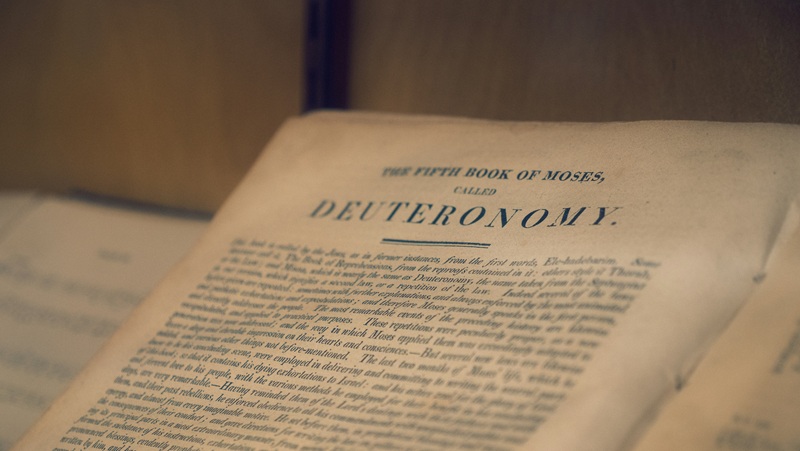
Deuteronomy 25:11–12 is the example most often cited. If two men are fighting and the wife of one seizes the other by the genitals, “you shall cut off her hand. Your eye shall have no pity.” Should this law be followed, and is it just? The answer to the second question is yes: whatever it required, it was just, because God gave it. The first question cannot be answered until the meaning of the text is established, and the text presents several challenges to the careful reader:
- It would be the only law in Scripture that prescribes mutilation as a penalty.
- The word translated “hand” in verse 12 is not yad, the ordinary word used in verse 11, but kaph, a word with a wider range of meaning.
- It follows immediately after the law of levirate marriage, which provides a dead man with offspring so that “his name may not be blotted out of Israel” (Deut. 25:5–10). The woman’s act threatens the very thing that law protects, a man’s ability to father children, and a careful reader must ask how the two laws relate.
For these reasons, the meaning of the text has long been debated, and it cannot be settled without careful interpretation.
This article does not attempt to resolve the question. The point is one of method. The meaning of the text must be established by exegesis, in light of the whole of Scripture, before any conclusion is drawn about its application. An objection that assumes one reading and then faults the broader theonomic position for that reading’s consequences has not yet engaged the position. It has only shown that interpretation is necessary, which the position already affirms.
Whatever the text meant, the Christian’s posture toward it should be submission, not embarrassment.
The Rebellious Son: Deuteronomy 21
A second text is raised in the same way. “If a man has a stubborn and rebellious son who will not obey the voice of his father or the voice of his mother” (Deut. 21:18–21), the law prescribes death. The objection follows quickly: “So you would execute children who will not take out the trash?”
The text does not describe that case. It describes a son whom his parents have disciplined repeatedly (“though they discipline him, he will not listen to them,” v. 18), and whom they describe before the elders as “a glutton and a drunkard” (v. 20). The word translated “glutton” is used in Proverbs of the profligate who squanders himself and others (Prov. 23:20–21; 28:7). This is not a young child, and the offense is not a single act of disobedience. It is a settled, dissolute rebellion that has resisted years of correction.
The procedure matters as much as the offense. The parents do not punish their son themselves. They bring him “to the elders of his city at the gate of the place where he lives” (v. 19), where the case is heard. There the judges must “inquire diligently” (Deut. 17:4; 19:18), and no one may be put to death except on the evidence of two or three witnesses (Deut. 17:6; 19:15). The law is an instance of adjudication: an accusation brought, examined, and judged after the fact.
Is the law just? Scripture says it is, and the text gives its purpose: “So you shall purge the evil from your midst, and all Israel shall hear, and fear” (v. 21). A reader who recoils at it should ask by what standard he judges it. If God’s law is not the standard for civil penalties, there is no principled basis for calling any penalty a state imposes too severe, or too lenient. How the general equity of this law bears on a modern case is a question for careful study. That the law was just is not.
What General Equity Is
The phrase “general equity” comes from the Westminster Confession, which says that Israel’s judicial laws oblige no one now “further than the general equity thereof may require” (19.4). Because the term is often used loosely, a definition is needed: General equity is the principle of justice that a particular law embodies. It binds wherever that principle applies, even when the law’s original circumstances no longer exist.
The parapet law illustrates both the principle and the misreading it is meant to correct. “When you build a new house, you shall make a parapet for your roof, that you may not bring the guilt of blood upon your house, if anyone should fall from it” (Deut. 22:8). A common objection takes this to mean that, on theonomic premises, every roof must have a railing, and then asks how Lancastrian theonomists can require the railing while denying the magistrate any power to enforce it.
The objection misreads the law on both counts. First, the letter was given for Israel’s houses, whose flat roofs were used as living and working space. A man today with a steep roof that no one walks on is not bound to build a parapet. What binds him is the principle: he must take reasonable precautions so that his property does not endanger his neighbor’s life. For one owner that means fencing a pool; for another, covering a well or repairing a failing staircase.
Second, the law itself distinguishes the duty from its civil enforcement. The moral duty binds before anyone is harmed: a man who carelessly leaves a known hazard is in the wrong even if no one has yet fallen. But the law names no inspector, no permit, and no penalty for an unfinished roof. Its only sanction is bloodguilt “if anyone should fall.” It binds the homeowner’s conscience at once, and it brings in the magistrate only after a man has been harmed. All men are bound to obey the commandments of God, but not every transgression is a civil crime.
When harm does occur, the judge must apply the law’s general equity to the facts before him. Was the owner careless? Did he know of the danger and disregard it? Did another party bear responsibility? These questions cannot be answered in advance by a code. They require diligent inquiry and sound judgment in each case. And because no two cases are ever the exact same, each accused man deserves his “day in court.”
Reason and prudence are needed at every step, and Israel’s own history shows that this never required new legislation. Israel came to possess horses and chariots, yet the law contains no chariot regulations. A death or injury caused by a chariot could be judged by reasoning from laws already given, such as those concerning the goring ox, the open pit, and the man who injures his neighbor (Ex. 21:18–36). New circumstances were met by applying existing law to particular cases, not by enacting new law.
The Draft and the Newlywed
The same method applies to Israel’s military laws. Before battle, the officers were to send home the man who had built a house and not dedicated it, the man who had planted a vineyard and not enjoyed its fruit, the man betrothed but not yet married, and the man who was “fearful and fainthearted,” lest he “make the heart of his fellows melt” (Deut. 20:5–8). A newly married man was not to go out with the army, but was to “be free at home one year to be happy with his wife” (Deut. 24:5).
Would it be unjust to follow these exemptions today? It is hard to see how. Rightly understood, they reveal a God who values marriage, home, and labor, and who would rather have a willing army than a large one. The objection supposes that these provisions describe a compulsory draft enforced by penalties, and then asks how a magistrate who cannot legislate could enforce it. But that supposition is itself an interpretation, and the text does not obviously support it. The law describes a muster and its general exemptions; it assigns no civil penalty to the man who stays home.
Even if Israel’s practice involved social pressure to participate, the text itself does not authorize the magistrate to treat non-participation as a civil crime. Whatever Israel’s muster involved, the Lancastrian question is the one the text itself raises: what acts does God’s law make punishable by the civil sword? Where God’s law assigns no civil penalty, the magistrate has none to impose.
The General Equity of the Laws Concerning the Magistrate
If general equity is the principle of justice a law embodies, it cannot be applied selectively. The objector rightly applies the general equity of the parapet law to a modern pool. Consistency requires that he also apply the general equity of the laws that define the magistrate’s office. Those laws are not obscure:
- God forbids adding to or taking from His law (Deut. 4:2; 12:32).
- Judges are appointed to judge the people with righteous judgment, without partiality or bribery (Deut. 1:16–17; 16:18–20).
- The king receives a copy of the law to read and obey all his days, “that his heart may not be lifted up above his brothers” (Deut. 17:18–20).
- In the New Testament, the ruler is God’s servant to carry out His wrath on the wrongdoer (Rom. 13:3–4), sent “to punish those who do evil and to praise those who do good” (1 Pet. 2:14), and the standard of good and evil is God’s commandments (Rom. 13:9).
The general equity of these texts is not difficult to state: the magistrate is to judge by the law God has given and to punish what that law calls evil. Nothing in them authorizes him to frame new laws, and Deuteronomy forbids it.
This brings us back to the alternative described at the beginning of this article: that the general equity of God’s law serves as guidance for legislators, who then write laws of their own. Those who hold this view usually reason in one of two ways, and neither succeeds.
- “General equity binds, so rulers may enforce it by statute.” God’s law does bind every man, but that does not mean every duty it imposes is enforced by the magistrate. The parapet law shows the difference. It places a duty on every owner before anyone is hurt, yet it gives the magistrate a role only after someone falls. That a principle binds the conscience does not make it a civil statute.
- “God’s law must be applied to new situations, so someone must write rules applying it.” This trades on two meanings of the word “apply.” A judge applies the law when he brings it to bear on a case already before him, with actual parties, actual evidence, and an act already committed. A legislature is said to apply the law when it writes rules that bind everyone in advance. Scripture commands the first and forbids the second. The need to apply God’s law is a reason for wise judges, not for legislatures.
General equity, consistently applied, therefore extends to the structure of justice itself. God did not only declare what is just; He appointed how justice was to be done. The same principle that binds a modern homeowner to take reasonable precautions binds the modern magistrate to the office God defined: to judge by the law already given.
Conclusion
The objections examined here share a pattern. Each assumes a reading of God’s law, often its most wooden one, attributes that reading to Lancastrian theonomy, and treats the result as a refutation. But the position does not depend on wooden readings. It requires the same careful study of Scripture that every Christian already practices in the church: attention to setting, to the whole canon, and to the difference between principle and circumstance.
The focus of Lancastrian theonomy is narrower than its critics often assume. It concerns the civil sword. It holds that God’s law is just; that its meaning must be learned through faithful study; that its general equity binds every man, including in duties owed before any harm is done; and that the magistrate applies that equity by judging actual cases, punishing only what God’s law makes a civil crime. It does not claim that every question of application is settled. Those who hold it, like all Christians, must keep studying how God’s Word applies today.
What the position denies is that the need for such study gives men authority to write laws God did not give. Difficult passages call for better exegesis, not a standard of human making. The law is good, if one uses it lawfully, and the general equity of God’s law is applied in adjudication, not legislation.