
Doug Wilson on NPR — Oh, How I Love the Constitution?
The Lancaster Patriot Podcast
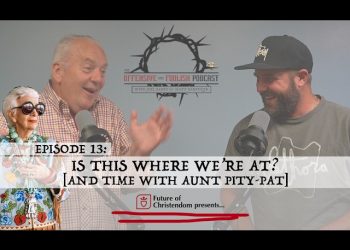
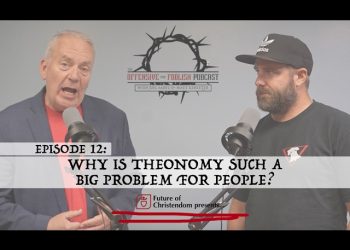
On this episode of The Lancaster Patriot Podcast, presented by Future of Christendom, Chris Hume responds to Doug Wilson’s recent NPR interview — and to one revealing line in particular: “I love the Constitution… I love the constitutional structure.”
It sounds like a harmless patriotic sentiment. But God has given His people a law and a structure for justice of His own — so what should we make of it when a prominent Christian leader professes love for a man-made one?
Chris argues that this instinct doesn’t stand alone. It’s tied directly to a second thing Wilson said in the same interview: that he’s not interested in applying the Old Testament straight across with no variations — that the judicial law no longer applies. And that, Chris contends, is the root: once you conclude God’s judicial law has passed off the stage, you’re left with a vacuum where the civil standard should be, and something has to fill it. Man does. And so a good man learns to love the framework men have built.
During the episode, Chris mentions an article highlighting how early American leaders began treating the Constitution like Holy Writ. To clarify a detail from the episode: it was actually John Quincy Adams (not John Adams) who shockingly lifted language directly from Deuteronomy to praise America’s founding documents.
In his 1839 Jubilee of the Constitution address, John Quincy Adams declared: “Your Mount Ebal, is the confederacy of separate state sovereignties, and your Mount Gerizim is the Constitution of the United States… Lay up these principles, then, in your hearts, and in your souls – bind them for signs upon your hands, that they may be as frontlets between your eyes – teach them to your children… cling to them as to the issues of life – adhere to them as to the cords of your eternal salvation.”
When Christians attribute national blessings to a man-made document and use the language of Scripture to revere a political framework, it reveals a massive blind spot in modern Christendom. We must reject the man-made legislative structure and return to God’s standard of justice.